
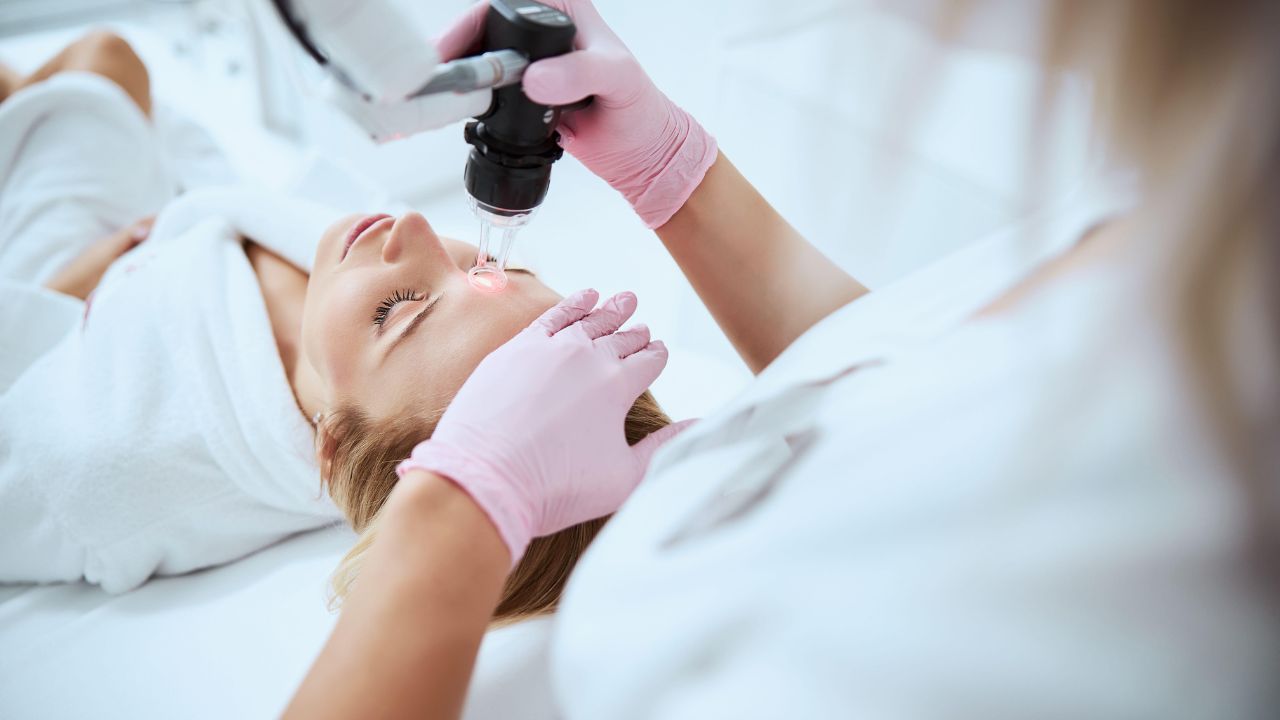
Laser resurfacing is one of the more advanced technologies available in aesthetic medicine. If you’re considering this treatment, it’s natural to have questions about what it can and cannot do.
Does laser resurfacing get rid of fine lines and scarring? What does recovery involve, and how long may results last? In this guide, the team at the Muse Institute of Aesthetic Medicine addresses these questions and more to help you make confident and informed treatment choices.
1. What should I expect during a laser treatment?
During a laser resurfacing treatment, a specialised device is used to deliver controlled energy to targeted areas of the skin. You may experience sensations such as warmth, tingling or mild discomfort as the laser is applied. A topical numbing cream may be used to keep you comfortable. Your practitioner will walk you through the process and provide pre- and post-treatment care instructions during your initial consultation.
2. Does laser resurfacing remove fine lines?
Laser resurfacing can help minimise the appearance of fine lines by stimulating collagen production. However, noticeable improvements can vary depending on the individual skin response and treatment type.
3. Does laser resurfacing remove scars?
Laser resurfacing does not remove scars completely. However, it may help soften their appearance by triggering a healing response that boosts collagen synthesis. As a result, skin may appear smoother and more even.
4. Can laser treatment support skin tightening in the lower face?
Laser resurfacing can be a viable option for visibly improving skin firmness in the lower face. It’s often recommended to those with mild to moderate skin laxity along the jawline, chin and around the mouth.
5. How may laser resurfacing support skin renewal?
Laser resurfacing supports skin renewal by using concentrated light energy to interact with the skin at different levels. Some treatments focus on removing damaged outer layers, while others deliver heat to deeper layers to stimulate the body’s natural response.
The thermal energy generated during treatment may activate fibroblasts, which are the cells responsible for producing collagen and elastin, key proteins that are essential in skin integrity, strength and flexibility. This process may support gradual improvements in skin texture, firmness and overall appearance over time.
6. Can laser treatment affect previous cosmetic treatments?
Yes, heat generated during laser resurfacing may influence how cosmetic treatments, including volumising treatments and skin boosters, behave within the skin. For this reason, practitioners may recommend allowing approximately two weeks between cosmetic treatments and laser resurfacing. This interval helps minimise potential interference between treatments, allows the skin to heal and settle and supports a more considered approach to treatment planning.
7. What is the usual recovery process after laser treatment?
Following laser resurfacing, it is common to experience temporary redness, mild swelling and warmth in the treated area. These effects typically settle as the skin recovers.
You will be provided with personalised aftercare instructions, which may include:
- Avoiding direct sun exposure
- Refraining from strenuous exercise until advised
- Using gentle skincare products
- Avoiding makeup immediately after treatment (makeup may be reintroduced after approximately 24 hours, if appropriate)
- Avoiding touching or scratching the treated area
If any side effects persist or you have concerns during recovery, contact your practitioner right away.
8. When can I return to normal activities after laser treatment?
As a general guide, below are baseline recovery timelines:
- Halo Laser Resurfacing — About five to seven days
- Erbium Laser Resurfacing — One full week
- CO₂ Laser Resurfacing — Recovery may take up to two weeks
During this time, the skin may appear red, sensitive or in the process of healing. Your practitioner will provide personalised aftercare instructions and guide you on when it is appropriate to return to work, exercise and your usual routine.
9. Why is sun care important after laser treatment?
Sun care is an important part of the post-treatment process, as the skin may be more sensitive during the recovery phase. Without adequate protection, exposure to ultraviolet (UV) rays may influence how the skin heals and contribute to visible changes in skin tone or pigmentation.
10. How long may the effects of laser treatment last?
The effects of laser resurfacing may vary for each individual, but often they may last for one to three years or more, depending on age, skin condition, lifestyle and ongoing skincare. Initial changes in skin appearance may begin to develop after the skin has recovered, with more noticeable improvements emerging over the following weeks. Continued refinement may be observed over three to six months.
Schedule an initial consultation for laser resurfacing
So, does laser resurfacing work, and is it right for you? The best way to find out is by booking an initial consultation at the Muse Institute of Aesthetic Medicine. Our clinic is led by Dr Stephen Lowe and supported by university-qualified dermal clinicians. We specialise in advanced laser resurfacing treatments, including Halo and Profractional. Reach out to us to determine which approach best suits your skin concerns.
