
The conversation around skin ageing is changing.
For years, most skincare focused on exfoliating the surface of the skin, stimulating collagen production, or temporarily improving hydration and texture. While these approaches still play an important role in skin health, advances in regenerative medicine are beginning to shift attention toward something deeper: how skin cells communicate, repair, and maintain resilience over time.
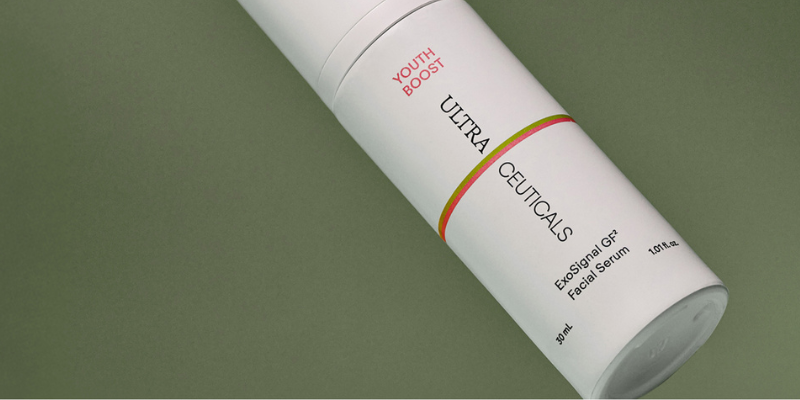
One of the newest areas of interest within regenerative skincare is the use of exosomes and growth factor technology — an emerging category designed to support the skin’s natural communication pathways and recovery processes. Products such as Ultraceuticals ExoSignal GF² represent part of this evolution, introducing advanced signalling technologies into modern skincare formulations.
At Muse Clinic, we are increasingly interested in technologies that support long-term skin quality, resilience, and healthy skin function — not simply short-term surface change.
Understanding Skin Ageing Beyond the Surface
Skin ageing is a complex biological process influenced by:
- collagen depletion
- elastin breakdown
- chronic inflammation
- oxidative stress
- environmental exposure
- hormonal changes
- reduced cellular repair capacity
As we age, the communication between skin cells gradually becomes less efficient. Fibroblasts — the cells responsible for collagen and elastin production — become less active, recovery slows, and the skin’s structural support weakens.
This contributes to many of the visible changes associated with ageing, including:
- reduced firmness
- loss of elasticity
- thinning skin
- dullness
- dehydration
- slower healing
- compromised barrier function
Modern regenerative medicine increasingly focuses not only on correcting these visible signs, but on supporting the biological processes involved in skin repair and maintenance.
What Are Exosomes?
Exosomes are microscopic extracellular vesicles naturally released by cells. Often described as “cellular messengers,” they carry proteins, peptides, lipids, amino acids, and signalling molecules between cells to help coordinate communication and repair processes.
Within skincare and regenerative medicine, exosomes are being investigated for their potential role in:
- supporting collagen production
- reducing oxidative stress
- improving skin recovery
- enhancing skin resilience
- supporting tissue repair pathways
- improving delivery of active ingredients
One of the reasons exosomes have generated so much interest is their ability to act as sophisticated delivery and signalling systems. Rather than simply applying active ingredients onto the skin’s surface, exosome technology aims to improve how these ingredients interact with skin cells themselves.
However, it is important to understand that exosome science in skincare is still evolving. While early data and clinical interest are promising, this remains a rapidly developing area requiring ongoing research and careful clinical interpretation.
Growth Factors and Cellular Communication
Growth factors are naturally occurring proteins involved in regulating cell behaviour, repair, and renewal.
Within the skin, growth factors help coordinate processes associated with:
- collagen synthesis
- tissue repair
- wound healing
- skin regeneration
- cellular turnover
As growth factor activity naturally declines with age, skin repair processes become less efficient. This is one reason regenerative medicine has increasingly explored ways to support these signalling pathways.
Advanced skincare formulations are now combining growth factors with exosome technology in an effort to enhance cellular communication and improve skin quality over time.
Introducing Ultraceuticals ExoSignal GF²
Ultraceuticals has recently introduced ExoSignal GF², a next-generation serum formulated with plant-derived exosomes and dual growth factor technology. The product is positioned around supporting skin renewal, resilience, elasticity, and long-term skin quality.
Unlike some international regenerative products that utilise human-derived exosomes, ExoSignal GF² uses plant-derived signalling technology, likely reflecting both safety considerations and evolving regulatory standards within topical skincare.
The serum is designed to support:
- skin firmness
- elasticity
- radiance
- skin density
- barrier resilience
- post-procedure recovery support
Importantly, products such as ExoSignal GF² are not intended to “stop ageing.” No skincare product can stop the biological ageing process entirely.
Instead, the modern approach to regenerative skincare is increasingly focused on supporting healthier ageing by helping maintain:
- skin function
- structural integrity
- barrier health
- cellular communication
- long-term skin quality
This distinction is extremely important.
Click here to order Ultraceuticals Youth Boost ExoSignal GF²
Regenerative Medicine and the Future of Skin Health
The broader field of regenerative medicine is increasingly influencing aesthetic medicine and skincare. Rather than focusing purely on correction, regenerative approaches aim to support the body’s natural repair and maintenance processes.
This shift is visible across many areas of modern aesthetics, including:
- energy-based skin tightening
- collagen stimulation treatments
- biostimulatory therapies
- advanced laser resurfacing
- skin barrier restoration
- longevity-focused skincare
The future of skin rejuvenation is likely to involve a more integrated approach that combines:
- clinical treatments
- skin barrier support
- inflammation management
- cellular signalling technologies
- preventative skin health strategies
At Muse, this philosophy strongly aligns with how we approach skin rejuvenation and long-term skin quality.
Why Skin Longevity Matters
Increasingly, patients are moving away from wanting dramatic or artificial-looking changes.
Instead, many patients are now focused on:
- maintaining healthy skin
- preserving skin quality
- improving resilience
- supporting natural structure
- achieving subtle, long-term improvements
This concept of “skin longevity” is becoming one of the defining themes in modern aesthetic medicine.
The goal is no longer simply to chase short-term correction, but to support healthier skin function over time.
The Role of Regenerative Skincare Following Treatments
One of the most exciting areas for regenerative skincare may be its role alongside professional treatments.
Advanced skincare technologies are increasingly being incorporated into treatment plans involving:
- laser resurfacing
- BBL HEROic
- MOXI
- HALO
- ClearSilk
- skin barrier rehabilitation programs
Supporting the skin before and after treatment may help optimise recovery, improve resilience, and maintain long-term skin quality.
This is where products focused on growth factors, barrier repair, and cellular signalling may become particularly relevant within modern skin programs.
A More Sophisticated Approach to Ageing
Perhaps the most important shift occurring within aesthetic medicine is philosophical.
The future of skin rejuvenation is becoming less about aggressively “fighting ageing” and more about supporting skin health intelligently over time.
At Muse, we believe the most sophisticated aesthetic outcomes are often achieved not through chasing extremes, but through maintaining:
- skin integrity
- structural support
- healthy function
- balance
- resilience
Regenerative skincare represents part of this broader movement toward evidence-based, longevity-focused skin health.
And while exosome and growth factor technology remains an evolving field, it is undoubtedly one of the most interesting areas currently shaping the future of modern skincare and regenerative aesthetic medicine.
Interested in a More Personalised Approach to Skin Longevity?
At Muse, we take an evidence-based approach to skin rejuvenation, focusing on long-term skin quality, resilience, and regenerative skin health.
If you would like personalised guidance regarding advanced skincare, laser treatments, or regenerative treatment pathways, our team would be happy to assist.
